If you know of other current amphibian-related news or papers that should be featured here, please contact us.
For AmphibiaWeb's list of current papers related to amphibian declines and amphibian conservation, updated monthly by Tim Halliday, see our Recent Scientific Publications page.
- February 6, 2012:
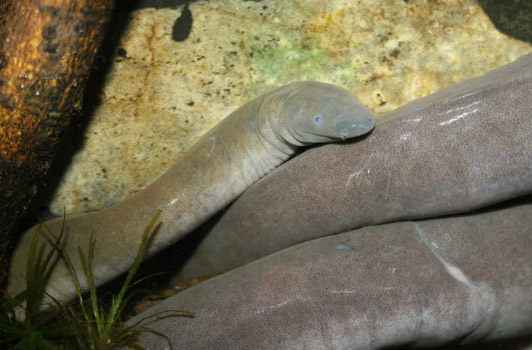
One of the most enigmatic amphibians is the lungless caecilian Atretochoana eiselti. Edward Taylor described this species in 1968, based on an old specimen in the Vienna Museum, said to be from South America. Wilkinson and Nussbaum (1997) studied the type in great detail and described its lunglessness and associated features. Authors conjectured that the species must be aquatic; the only other known lungless caecilian is the tiny terrestrial Caecilita iwokramae. Now, Hoogmoed et al. (2011-PDF) report rediscovery of the species in Brazil, from Baía de Marajó, a tidal zone near Belém, but also from the geographically remote (2000 km) upper reaches of the Madeira River in Rondônia. The largest specimen is a meter long. How this species survives in such varied environments and how respiration takes place remain to be discovered. (DW)
- January 30, 2012:
Froglog, started 20 years ago by the Declining Amphibian Populations Task Force (DAPTF) and now published by the Amphibian Specialist Group, celebrates its 100th issue, 69 pages of amphibian research and conservation news from around the world. FrogLog continues with special regional focus issues, the latest on South American herpetology. Read the latest FrogLog directly on AmphibiaWeb!
- January 23, 2012:
Chytridiomycosis is thought of as exclusively an amphibian disease. However, it is clear that the causative fungus Batrachochytrium dendrobatidis (Bd) can persist in the environment and other non-amphibian species may serve as vectors. A recent paper by Kilburn et al. suggests that reptiles may spread the disease by having the fungus on their skin. The study in Panama surveyed 21 species of snakes and lizards and found Bd in varying intensities and was positively correlated with infection rates among co-occurring frog species. Whether reptiles simply act as vectors or reservoirs and are not likewise infected remains to be shown. (JW)
- January 20, 2012:
IN MEMORIAM: Joseph T. Collins, founder of the Center for North American Herpetology website, died on January 14, 2012, at the age of 72. He was one of the founders of the Ohio Herpetological Society, which became the Society for the Study of Amphibians and Reptiles, and was associated with the University of Kansas for many years. Roger Conant invited Collins to join him as a coauthor of the third edition of the Field Guide to Eastern Reptiles and Amphibians in the Peterson Field Guide series. Collins wrote extensively about the Kansas herpetofauna and long advocated for increased public awareness of amphibian and reptiles. (DW)
- January 16, 2012:
AmphibiaWeb added 149 species of amphibians to our database in 2011, the fewest since we began keeping track in 2004. However, 2010 was a big year, with 205 species added, and the passage of a year is a pretty arbitrary stopping point. The mean number since 2004 is 184. Most of the additions are new discoveries, but some are subdivisions of taxa stimulated by new discoveries. An example of this pattern is the new monograph in Zootaxa of the megophryid frog Leptolalax (Lalos) by Ohler et al. . New discoveries led to new analyses that showed formerly widespread species to be non-monophyletic, which in turn led to descriptions of truly new species and the resurrection of others from synonymy. (DW)
- January 1, 2012:
Happy New Year’s to all our users and contributors! As a community of amphibian enthusiasts, researchers and students, you have contributed almost 24,000 photos of 3,631 different amphibian species, and 2,810 species accounts out of the 6,909 total species of amphibians that we tally here at AmphibiaWeb. We sincerely thank you for all your contributions and for using AmphibiaWeb as your resource for information on amphibians, their biology. and their decline status. We look forward to an exciting 2012 with many new developments on tap, including updated taxonomy, new taxonomy tools, enhanced maps, and improving mobility with our iPhone app, which you can treat yourself to now (download from iTunes). Stay in touch with AmphibiaWeb as we move forward into 2012!
- December 19,2011:
The task to survey and monitor often cryptic species in the world’s aquatic systems such as ponds, streams, lakes, and wetlands is a daunting challenge. Biologists now have a powerful new tool which starts with just a shot-glass size sample of pond water. A Danish research team has shown that DNA traces in the water sample can be amplified and thus contain evidence of an entire aquatic fauna. The proof-of-concept study focused on species as diverse as the Eurasian otter, Weather loach (fish), Spadefoot toad (Pelobates fuscus), Great crested newt (Triturus cristatus), Large white-faced darter (dragonfly), and the tadpole shrimp. This may be the future of biodiversity monitoring, using DNA traces in the environment to discover and keep track of threatened wildlife. (MK)
- December 12, 2011:
In a November 2011 Letter to Nature, Hof, Araújo, Jetz and Wahbek report that multiple threats from pathogens, land-use and global climate change affect amphibian populations, and that together, these additive, multiple effects will likely cause accelerated declines and extinctions in the 21st century. Using current distributions of amphibians and the fungus pathogen chytridiomycosis with future climate scenarios, the authors projected that areas most affected by chytridiomycosis would have little spatial overlap with areas most affected by global climate change and land-use change. Areas most affected by global climate change also have high land-use change impacts. The latter occurs in Africa, parts of northern South America and the Andes. Overall, the areas where the richest amphibian faunas occur will be disproportionately more affected by one or multiple threats than areas with low amphibian richness. (CS)
- December 5, 2011:
Where to search for missing amphibian species? Garcia-Rodriguez et al. recently provide a method that could help to find populations of such species, especially in countries that have undergone a severe decline in amphibian species, both in abundance and distribution, such as Costa Rica. By creating consensus climatic niche maps of the historic range of endangered species and their relictual (i.e. persistent) distributions, they considered an array of factors, such as conservation areas, potential presence of pathogens, collecting effort, annual precipitation, among others, resulting in geographic predictions that have matched well with recent discoveries of relictual populations. Their method could be influential on decision-making about the location of future protected areas, as well as where to target limited funds on the discovery of endangered species. (JW)
- November 28, 2011:
Rediscovery of the Hula Painted Frog (Discoglossus nigriventer) in northern Israel is a great and welcomed surprise. The species was declared extinct in 1996 and had not been observed since 1955. The only preserved specimens are the holotype, collected in 1940, a second specimen, collected in 1955, and two tadpoles. The initial discovery of the species included two specimens but the holotype ate its companion in captivity! On November 15, 2011, an adult was found by Yoram Malka, a warden at the Hula Nature Reserve. It was swabbed for future DNA studies and returned to its habitat. Discoglossus is otherwise restricted to southwestern Europe and northwestern Africa. The 6,000 hectare Hula wetlands region, an important resting area for migrating birds, was largely drained for malaria control in the 1950s, but happily the species survived in a 320 hectare remnant that became Israel’s first nature reserve in 1964. The discovery received great media attention, as is appropriate for an event heralded as biologically equivalent to the discovery of the Dead Sea Scrolls! (DW)
- November 21, 2011:
AmphibiaWeb has gone mobile! Good news for iPhone users as AmphibiaWeb now has a mobile app in beta, available for downloading from iTunes. Written by an enterprising AmphibiaWeb volunteer, it allows you to search for amphibian species by name or geography including your location and then view species descriptions, photos, and listen to calls. We are still adding functionality and refining the checklist feature that will generate a list of expected species by your location, so stay tuned for updates. Please let us know what you think; your feedback is valuable.
- November 14, 2011:
New studies of fungal genetics have implications for amphibians. Rhys Farrer et al.
report multiple deeply diverged lineages within the chytrid fungus Batrachochytrium dendrobatidis (Bd), which causes chytridiomycosis in amphibians. A specific hypervirulent lineage is associated with disease outbreaks on multiple continents. Perhaps human-mediated mixing of lineages of different geographic origin gave rise to the hypervirulent lineage. A second study by Suzanne Joneson et al. reports the complete genome of a related chytrid and compares it with Bd and 19 other fungal genomes, finding 1,974 Bd specific genes. Among these are a protease gene family that has emerged recently and may have implications for Bd pathogenicity. Probing genetic diversity of Bd and related fungi will likely be an important future direction for understanding the origin, spread, and pathogenicity of Bd. (DB & DW)
- November 7, 2011:
A major revision of South American poison frogs discusses controversies over the taxonomy of Dendrobates (in the broad sense, as previously on AmphibiaWeb) and supports division of the genus into seven genera, including a new genus Andinobates. The monograph by J.L. Brown , E. Twomey, A. Amézquita, M.B. De Souza, J.P. Caldwell, S. Lötters, R. Von May, P.R. Melo-Sampaio, D. Mejía-Vargas, P. Perez-Peña, M. Pepper, E.H. Poelman, M. Sanchez-Rodriguez, and K. Summers (“A taxonomic revision of the Neotropical poison frog genus Ranitomeya (Amphibia: Dendrobatidae)” 2011 Zootaxa 3083: 1-120) is profusely illustrated in color and includes extensive analyses of new and existing molecular data and a great deal of detail concerning the biology of these diminutive and spectacular species. (DW)
- October 31, 2011:
An extensive new phylogeny has been reconstructed for amphibians, based on over 2,800 species representing 86% of amphibian genera (Pyron and Wiens 2011). In comparison, the largest previous study on amphibian phylogenetics (Frost et al. 2006) used 522 species and data from less than half as many genes. Pyron and Wiens' supermatrix analysis supports many previous conclusions on amphibian familial taxonomy but also shows that some currently recognized families are non-monophyletic and recognizes a number of new families. See the latest issue of Molecular Phylogenetics and Evolution (November 2011) for more details. (KW)
- October 24, 2011:
Many studies using future climate models have shown the potential, and often severe, impact on species distributions. A recent one in Ecology Letters ( Early and Sax 2011) took a closer look at future climate projections specifically by tracking 15 western North American amphibian species’ distributions as predicted by future climate niche models and the likely corridors they would have to travel by 2100 to maintain their current environmental conditions. They found that even if future distributions were large, the intermediary decades of climactic fluctuations may still imperil species if range shifts are not continuous or too brief for low vagility species like amphibians. The authors raise important considerations for conservation efforts. (MK)
- October 17, 2011:
Female Strawberry Poison frogs, Dendrobates pumilio, can be aggressive to each other, and a new study by Meuche, Linsenmair, and Pröhl (2011) explains why. In the Hitoy Cerere Biological Reserve, Costa Rica, female frogs defend a “core area” against other intruding females. The core area was defined as 50% of observation points within the female’s home range. Females did not defend mates, oviposition or tadpole-rearing sites but seem to be defending spatially-limited food resources. Over 54% of all female-on-female agonistic behavior took place within individuals’ core areas, and most female feeding also occurred within this “core”. Aggressive behavior included jumping, clasping or wrestling. Defense of food is important to females both for survival and because food intake influences egg size. (CS)
- October 10, 2011:
Do you know about the
Bolivian Amphibian Initiative? This project focuses on both monitoring and conservation of Bolivia’s endangered amphibian species, notably in the high Andes. The Bolivian Amphibian Initiative provides training and community outreach as well as research opportunities and conservation actions such as a captive breeding program. This landlocked country holds at last count 240 amphibian species, a good fraction of them being endemic and threatened or endangered by several factors while many are simply data deficient. A lot of areas are poorly documented and monitoring is highly needed. This project, bringing together local people, park guards and biologists, is a remarkable initiative that addresses much needed attention and focus on Bolivian amphibian fauna. (JW)
- October 3, 2011:
In a recent study of wild frog populations, Savage and Zamudio demonstrate a genetic basis to survival following infection with the chytrid fungus Batrachochytrium dendrobatidis (Bd). When looking across the populations in their study, the authors found that having more genetic variation in immune (MHC) genes was positively related to an individual’s ability to survive Bd infection. Within populations, one specific genetic variant was related to increased survival of individuals. Importantly, this one variant that confers resistance was found to be under positive selection. This demonstrates that natural populations of amphibians can evolve resistance to Bd. (DB)
- September 26, 2011:
The Western Ghats lines the entire western front of India, forming a mountainous rain shadow, and consequently, a recognized biodiversity hotspot. Even so, the full extent of amphibian biodiversity may have just started to be fully known as suggested by the 24 new amphibian species formally described in 2011 so far, including a new caecilian, one Polypedates frog, nine Raorchestes frogs, one Leptobrachium frog, and now S.D. Biju and colleagues reveal 12 new species of Nyctibatrachus, also known as Night frogs. In a taxonomic revision of the genus, they also report the rediscovery of three species thought to be extinct, a new morphological structure to diagnose this group, as well as new courtship and egg attendance behaviour for several of these species. In all, the genus Nyctibatrachus is recognised with 28 species in a paper that lays the groundwork for more detailed research for this genus and amphibians of the Ghats. (MK)
- September 19, 2011:
Barbourula kalimantanensis, the only frog known to lack lungs, lives in cool, clear, well-aerated, mainly headwater streams in mountains along the border of West and Central Kalimantan in a small area in the west-central island of Borneo. Strictly aquatic, its only relative is a congener restricted to three islands in the western Philippines. It is currently listed as Endangered by IUCN. Rachmayuningtyas et al. report new discoveries that extend the range and disclose some genetic diversification. Habitat is severely limited but the range now extends over an area of more than 5,000 sq km so the authors propose reclassifying the species as Vulnerable. They also propose that the species be treated as a flagship species for Bukit Baka Bukit Raya National Park, where several populations occur. Nevertheless, the severe habitat requirements of the species means that vigilance is necessary to prevent logging and stream degradation. (DW)
- September 12, 2011:
The severe wildfires in Texas has affected millions of people and wildlife in the state. The endangered Houston Toad, Bufo houstonensis, will likely suffer a severe setback as a result of fires in Bastrop County, near Austin, Texas. The area has had a combination of >75 days in the triple digits and virtually no rain in several months. The loblolly pine forest encompassing Bastrop State Park became a tinder box waiting to explode, and it did so during the past week of September. All but 50-100 acres of the 6,000-acre park has been burnt. The park and surrounding area are the residence of one of the largest populations of the toads, numbering about 2,000, and the fires may have devastated their numbers. Because Bufo houstonensis breeds in February and March when the first spring rains arrive, and is not active for most of the year, the fire's effect will be unknown until the next breeding season. (DC)
- September 5, 2011:
A reptile on AmphibiaWeb?! A little over 3 months old, the Global Amphibian Bioblitz has been steadily growing with now 11% of the world’s amphibian species observed by naturalists worldwide. With increasing coverage, it has inspired the Global Reptile Bioblitz, which aims to do the same for the world’s 9,413 species of reptiles. Help spread the word, increase awareness of our fascinating herpetofauna, and make your mark on the Global Amphibian and Reptile Bioblitzes! (MK)
- August 28, 2011:
Think this is a snake? Look again--it's a fanged frog (Limnonectes macrocephalus). Setiadi et al. (2011) report in the journal American Naturalist that a surprisingly diverse adaptive radiation of fanged frogs has taken place on the island of Sulawesi, Indonesia, over the relatively rapid time span of just 15 million years. Fanged frogs (genus Limnonectes) are the only frog group on Sulawesi that have successfully diversified, and body size corresponds strikingly with ecological niche. For instance, small-bodied fanged frogs are found in leaf litter near rivers and have evolved derived modes of reproduction (including viviparity) allowing them to invade terrestrial niches. A comparison with the anuran fauna of the Philippines reveals that the absence of competition (e.g., from the frog genus Platymantis) may have enabled the expansion of Limnonectes into many new niches on Sulawesi. (KW)
- August 22, 2011:
Chytridiomycosis has devastated many species of amphibians in Australia, Central America, Europe, and North America. However, few studies so far have examined the impact this fungal disease is having on Asian amphibians. Now Swei et al. (2011) report in a new PLoS One paper that chytridiomycosis infection prevalence patterns are strikingly different in Asia. The fungal pathogen Bd appears to be widely distributed in Asia (as previously predicted by niche modeling) but at very low prevalence. Also, in contrast to Central America and California, no evidence of a moving epidemic wave has been found, and mass amphibian die-offs do not appear to have occurred in Asia. The implications are that Bd may be either endemic at low prevalence, newly emerging (possibly in the Philippines), or unable to fully invade Asian amphibians. (KW)
- August 15, 2011:
Natural hybridization between species is an important evolutionary mechanism for creation as well as extinction or local extirpation of lineages. The formation, maintenance, and consequence of hybrid zones between species is both an evolutionary and ecological study. Such a study (Hauswaldt et al 2011) on the natural hybridization between the ancient sister lineages of Salamandrina perspicillata and Salamandrina terdigitata, endemic species of the Italian Appennine peninsula, show extensive, ongoing hybridization (up to 80% of the contact population). These two species were only recently distinguished from each other (2005) and little is known of their natural history, which confounds how these species are able to maintain their observed molecular distinctions as species and leads to questions of whether ecological mechanisms may also be in play. (MK)
- August 8, 2011:
Many species of Poison Frogs (Dendrobatidae) are brightly colored and distasteful to predators. A predator, such as a snake or bird, that grabs a poison frog such as Ameerega bilinguis (above) will spit it out and eventually learns to avoid frogs that resemble it. However, the "poison" frog Allobates zaparo (above), in the same family, is not distasteful. Instead, it is a mimic of the distasteful species Ameerega bilinguis. In this phenomenon, Batesian mimicry, the mimic is protected from predators who leave it alone because it resembles the foul-tasting species, called the model. Both model and mimic live in the same region of lowland rainforest in Ecuador. Although some other species of frogs are believed to be Batesian mimics, Allobates zaparo is the only species for which experiments have shown conclusively that predators cannot distinguish it from the distasteful species. Can you tell which species is harmful and which is harmless? (DC)
- August 1, 2011:
Unlike most papers on the deadly amphibian fungal disease caused by Batrachochytrium dendrobatidis, or Bd for short, a recent paper in Frontiers in Zoology evaluate epidemiological solutions to this global crisis, and thus shed hope on the conservation of amphibians. It is clear from their review of Bd pathogenesis that much has been rapidly learned of this organism, and therein lies many of the strategies. From in situ solutions of habitat alterations (e.g. ecosystem engineering) to bioaugmentation and possible immunization with vaccines, these are sophisticated but still untested solutions that nonetheless point to a brighter future. (MK)
- July 25, 2011:
How might montane amphibians respond to climatic warming? Gifford and Kozak studied two southern Appalachian salamanders, Plethodon teyahalee and P. jordani to determine what sets their elevational range limits. Plethodon jordani is intolerant to warmth and is restricted to uplands. In contrast, P. teyahalee, which replaces P. jordani at lower elevations, would thrive at higher elevations, but its range is limited by apparent competition with P. jordani. Ancestors of eastern Plethodon may have been upland forms and phylogenetic conservatism expressed in physiological traits may explain why so many of them are restricted to upland sites. More generally, range limits, often considered to be determined mainly by competition, may instead be determined more frequently by organismal traits. (DW)
- July 18, 2011:
Good news: One of the Lost Amphibian species on Conservation International's top ten list has been rediscovered: Ansonia latidisca, the Borneo rainbow toad. This spectacular arboreal toad had not been seen since a few specimens were collected in 1924. It was rediscovered in a remote area of Malaysian Borneo, after months of searching by a team led by Dr. Indraneil Das of Universiti Malaysia Sarawak (UNIMAS). (KW)
- July 11, 2011:
The Global Amphibian Bioblitz is a recently launched citizen science project, which aspires to observe every species of amphibian around the world. Such ambition requires the efforts of naturalists everywhere in collaboration with AmphibiaWeb, the Smithsonian Conservation Biology Institute, Center for Biological Diversity, the IUCN/SSC Amphibian Specialist Group, and Amphibian Ark. The project website and database is powered by the iNaturalist site where anyone can sign up and participate. Initiated on May 25th, the GAB has already logged in 589 species out of 6,823 known amphibians, 8 % of all species, representing 84 % of amphibian families. Keep up with the progress of the global effort and log in to participate as an observer or communicate with others at the Global Amphibian Bioblitz. (MK)
- July 4, 2011:
Dorsal crests of male newts (family Salamandridae) are particularly conspicuous during breeding season and their origin may be related to the complex courtship behaviors of these salamanders. In a new analysis that combines information on evolutionary relationships with data on morphology as well as behaviors, Wiens and colleagues reveal a complex relationship among these traits. The various dorsal crest traits that characterize mature male newts have been lost repeatedly. The evolution of the dorsal crest may be related to certain specific behaviors such as fanning and whipping of the tail. Species with higher numbers of crest-related traits also have larger repertoires of courtship behaviors. (DCB)
- June 27, 2011: Hellbenders (Cryptobranchus alleganiensis), known to be rather sedentary sit-and-wait predators, were found in a recent study in Indiana ( Burgmeier et al. 2011) to move further and have larger home ranges than previously thought. More movement occurred during the summer, which is their breeding season, than in the fall. Home ranges were on average 1545 m2, but during the fall home ranges decreased to 644 m2. Hellbenders preferred gravel substrate in flowing water (runs), and also pools over riffles. They used medium to larger sized boulders more frequently than expected. Larger shelter rocks were used in non-summer months with the average movement between frequently-used rocks about 28 m. (CS)
- June 20, 2011: Poison frogs (Dendrobatidae) are famous for their bright coloration. It is well known the most brightly colored species are protected by distasteful skin alkaloids. A predator that attacks one of these frogs will be unlikely do so again. This combination of defense and conspicuousness is called aposematism. A second and recently documented function of brightness is that females preferentially choose males based on their brightness and color. Now a third advantage is shown. In the strawberry poison frog, Dendrobates pumilio, the bright coloration functions—in male-male competition. Males of this species set up territories that they defend vigorously against other males. When defending his territory, a bright-colored male preferentially approaches brighter (as opposed to dull) intruders, does so more quickly, and directs more calls to these rivals. For these frogs, there are many advantages to being obvious. (DC)
- June 13, 2011: The enigmatic Vegas Valley Leopard Frog (Rana fisheri) once thrived in springs and associated creeks and ponds in the Vegas Valley of southern Nevada before urbanization destroyed its habitat. By 1942, the species was thought to be extinct. Using ancient DNA methods with frogs fixed in ethanol in 1915 and preserved at the California Academy of Sciences, Hekkala and colleagues (2011, Biological Conservation) have shown that samples of R. fisheri cluster within the northwestern clade (of two clades currently assigned to Rana chiricahuensis), and they have assigned members of that clade (mainly from the Mogollon Rim region) to R. fisheri. The status of the second clade, currently R. chiricahuensis, is now in question, especially important given recent focus on conservation efforts. (DW)
- June 6, 2011: Tropical amphibians in pristine forests are more likely to be infected by the fungal chytrid pathogen, Batrachochytium dendrobatidis (Bd), than amphibians in deforested areas of the tropics, according to research by Becker and Zamudio (2011), published in PNAS. (JG)
- May 30, 2011: Although Sri Lanka and India were connected by land bridges several times, most recently at about 10,000 years ago, their faunas do not entirely overlap and clade-level endemism is present. Reinforcing this observation, Meegaskumbura et al. have distinguished a new genus of foam-nesting rhacophorid treefrogs endemic to Sri Lanka. The new genus Taruga contains three species (Taruga fastigo, T. eques, and T. longinasus), all with restricted distributions mainly in Sri Lanka's forested highlands. All three species were formerly considered to be in Polypedates, but both Taruga adults and tadpoles can be distinguished morphologically and molecularly from the more widely ranging Sri Lankan Polypedates species (P. cruciger, P. maculatus). (KW)
- May 22, 2011: Good news for frogs: Five endemic African frog species, not seen since their descriptions over half a century ago, have been rediscovered in the mountains of eastern Democratic Republic of Congo. A team led by Eli Greenbaum of the University of Texas El Paso found Arthroleptis pyrrhoscelis, Chrysobatrachus cupreonitens, Hyperolius chrysogaster, Hyperolius leucotaenius, and Phrynobatrachus asper on Itombwe Plateau and in Kahuzi-Biega National Park. The remote Itombwe Plateau is one of the most biologically distinctive regions in Africa, with high levels of amphibian and bird endemism and a unique gorilla subspecies, but eastern Congo forest habitats are increasingly being destroyed for agricultural use. (KW)
- May 16, 2011:
In contrast to the limited range of morphological variation in adult frogs, tadpoles have diversified into an impressive array of ecomorphs. In a new recent paper, Roelants, Haas and Bossuyt (PNAS May 9, 2011) used a molecular phylogeny to show that the greatest expansion in morphological types were coincident with the basal anuran radiation. Subsequently, morphospace evolution slowed; extensive morphological evolution associated with the neobatrachian radiation featured homoplasy rather than innovation. (DW)
- May 9, 2011:
Atelopus are the brightly colored Neotropical Harlequin toads. This clade (Bufonidae) has suffered drastic population declines and extinctions of more than half of the 100 species (including A. ignescens pictured above). A phylogeny of approximately 20 species, reveals two patterns (Lötters et al. 2011 Systematics and Biodiversity 9(1):45-5). First, the variable colors and patterns of the species have confounded species delimitations. Second, the traditional delineation into lowland, gracile species and montane, robust species, does not conform to phylogeny. Rather, the group matches biogeography, with a northern Andean-Chocoan-Central American clade, and a southern Andean-Amazonian-Guianan clade. (DC)
- May 2, 2011:
Natural hybridization among recent species has been viewed traditionally as a homogenizing force, but new research has revealed a possible role for interspecific gene flow in facilitating species radiations. Natural hybridization can contribute to radiations by introducing novel genes or reshuffling existing genetic variation among diverging species. Fontenot et al. (2011) examined nuclear and mitochondrial variation in the Bufo (Anaxyrus) americanus group. Their phylogenies from nuclear and mitochondrial data were discordant, due to recent and/or ongoing natural hybridization events and high levels of gene flow between sympatric populations. This group may have benefited from genetic admixtures that have occurred since recent glaciations. (KW)
- April 25, 2011:
In a forthcoming study, Vieites et al. analyze relationships among the major lineages of the most diverse family of salamanders, the Plethodontidae, using DNA sequence data from nuclear genes and complete mitochondrial genomes. They find that the European and Asian plethodontids, Hydromantes and Karsenia, are sister taxa and part of a large clade of North American salamanders. The four-toed salamander, Hemidactylium scutatum, is found to be part of a lineage containing the slender salamanders (Batrachoseps) from western North America and the diverse tropical plethodontid salamanders of Central and South America. Based on these analyses, the authors proposed a revised subfamily taxonomy for the Plethodontidae. (DB)
- April 18, 2011:
In some caecilian species, larvae tear off and consume their mother's skin for nutrition. Now, for the first time, it has been reported that this may occur in an anuran species (Rabb's treefrog, Ecnomiohyla rabborum, from Panama). In an unusual twist, it may be the male parent providing nutrition; tadpoles develop in water-containing treeholes and field observations indicate that the tadpoles appear to rasp the epidermis of the father frog when he immerses his body among them. However, this hypothesis is unlikely ever to be formally tested. Chytridiomycosis has swept through and devastated the amphibian community at the type locality for this species, and only one lone male is known to survive in captivity. Read Mendelson's (2011) essay in Herpetological Review for more. (KW)
- April 11, 2011:
It's not easy being green...unless you're a spotted salamander (Ambystoma maculatum) embryo. Kerney et al. (2011) have documented the first known case of endosymbiosis between a vertebrate and an alga. The green algae are found not only in the jelly coat of the egg but also incorporated into the salamander's embryonic and larval tissues. Although the symbiotic relationship is relatively short-lived, with embedded algal cells diminishing in number as the salamander larva develops, this finding opens new avenues of inquiry into intracellular symbiosis in vertebrates. (MK)
- April 4, 2011:
The Neotropics (tropical areas in Central and South America) contain half of the Earth's remaining rain forests and the largest diversity of amphibian species of any region. A recent study reconstructed the biogeography of a highly diverse group of Neotropical frogs, the poison frog clade (Dendrobatidae). The study rejected an Amazonian center-of-origin for this group of frogs, and instead, concluded that a significant percentage of dendrobatid diversity in Amazonia resulted from repeated immigrations (mostly from the Andes Mountains), with radiations at <10.0 million years ago (MYA), rather than in situ diversification. The study also concluded that dendrobatid frog species in the Andes, Venezuelan Highlands, and Guiana Shield have undergone extended in situ diversification at near a constant rate since the Oligocene. (VV)
- March 28, 2011:
Developmental biologists seeking to understand the genetic and embryological underpinnings for the evolution of the basic shapes and forms used to recognize major groups have long been interested in the Hox genes that control the head-tail axis and major body segments in vertebrates and invertebrates alike. Recently, Mannaert and colleagues (2010) compared Hox gene clusters across amphibians and other vertebrates, and discovered that caecilians had an enlarged section of Hox genes, three times larger than in mammals, which more closely resembled those sections of the gene clusters in coelacanths and snakes, although unique in configuration. Whether the specific gene loss and gain is responsible for limblessness in caecilians remains unclear, but it certainly shows there is more vertebrate variation in Hox genes than previously thought. (MK)
- March 21, 2011:
A special double issue of the journal Diseases of Aquatic Organisms is solely devoted to "Chytridiomycosis: an emerging disease". The
double issue (Vol. 92, numbers 2-3: 89 - 260) contains a foreword (by AD Hyatt, R Speare, AA Cunningham, and C Carey) and twenty articles on diverse topics by many authors. Excerpt from the Foreword: Chytridiomycosis "is arguably the most significant recorded infectious disease of any vertebrate class. The disease is reducing amphibian biodiversity across most continents and regions of the world, affecting the resilience of surviving populations and driving multiple species to extinction". The articles range from general overviews (e.g. JP Collins on “Amphibian declines and extinction: what we know and what we need to learn”) to technical studies of the chytrid organism itself or its effects on particular species (such as Leiopelma archeyi) and are global in scope. (DW)
- March 14, 2011:
Manu National Park in southern Peru is a hotspot for amphibian biodiversity, encompassing habitat from lowland tropical rainforest to high-elevation Andean cloudforest. While lowland amphibian species such as this tiger-striped leaf frog Phyllomedusa tomopterna are doing well, chytridiomycosis is wreaking havoc at higher elevations in Manu. Work by Catenazzi and colleagues has documented a dramatic decrease in species richness and abundance for Manu high-elevation anuran species over a 10-year period, particularly in stream-breeding amphibians. Their data support the hypothesis that the pathogenic chytrid fungus Bd is moving southward in a wave along the Andean cordilleras. (KW)
- March 6, 2011:
The giant toads of the forests of West and Central Africa are often feared by local people but also play a role in traditional medicine and lore, including that these toads give birth to the rainbow. Now
Barej and colleagues have revised this large, charismatic species by recognizing three distinct lineages. Distinct subspecies of Bufo (Amietophrynus) superciliaris are restricted, respectively, to the Lower Guinean forests and the Upper Guinean forests centered around Ivory Coast and Liberia. In addition, a new species, A. channingi, is described that is so far known only from the war-torn eastern Democratic Republic of Congo, including the Itombwe Plateau, already known for its endemic amphibian species. (DB)
- February 27, 2011:
Kaiser et al. (2011) found that anthropogenic noise decreases both the long- and short-term duration in which male frogs are at the breeding chorus. This is likely to decrease reproductive success because females join the choruses later at night. So, males and females overlap less at the breeding pond. This phenomenon potentially influences population dynamics and may contribute to anuran declines. (DC)
- February 20, 2011:
A five-month long
Search for Lost Frogs
organized by Conservation International (CI) and
the IUCN Amphibian Specialist Group (ASG),
with support from Global Wildlife Conservation (GWC),
has resulted in the re-discovery of only four species from a "Top 100" list. An additional eleven species
that have not been seen for many years were also found.
The search involved 126 researchers in 21 countries on 5 continents. (JG)
- February 13, 2011:
Mexican Spadefoot toads (Spea multiplicata) have evolved interesting adaptations for living in North American deserts. Some tadpoles of this species become carnivores, or even cannibalistic, preying on anostracan fairy shrimp and other tadpoles that share their ever diminishing ponds. Whether S. multiplicata tadpoles become carnivorous depends on their mother’s size (Martin and Pfennig 2010). Larger females invest in larger eggs, which become larger tadpoles, and these tadpoles are faster at catching shrimp and more likely to become carnivores. Smaller mothers produce smaller offspring, which become omnivorous tadpoles. Therefore, maternal effects may reinforce character displacement and population divergence in Spadefoot toads and promote the evolution of novel phenotypes. (CS)
- February 6, 2011:
The fungal chytrid pathogen, Batrachochytium dendrobatidis (Bd), is reaping havoc on the world's amphibians causing hundreds of species to go extinct. Most of the attention has been focused on highly susceptible amphibians, yet hundreds of other species appear to become infected with little apparent effect. Whether there are substantial sublethal effects of Bd infection remains unknown. The authors of a currently published story (Han et al. 2011) examined the effects of Bd-sublethal effects on antipredator behavior of tadpoles from four species of western North American amphibians. They found that sub-lethal exposure to Bd can alter fundamental anti-predator behavior in Bufo boreas and suggest that it could increase predation risk in Bd-infected tadpoles. (VV)
- January 31, 2011:
Introduced species are a well-known phenomena in Florida. A recent phylogenetic analysis of two presumably recent introductions, the Greenhouse frog (Eleutherodactylus planirostris) and the Cuban treefrog (Osteopilus septentrionalis), show different patterns of nucleotide sequences compared to populations from their native range (Heinicke et al 2011). The study pinpoints E. planirostris emerging from a single colonization event from western Cuba to the Florida Keys, while O. septentrionalis is from two or more Cuban sites. Divergence times between Cuban and Floridian populations appear to be early enough for E. planirostris to be coincident with the formation of the Florida Keys, while the Cuban treefrog introduction likely was human mediated. The analysis contrasts a longterm resident from a more recent introduction, clarifying their dispersal patterns. (MK)
- January 22, 2011:
In 1985, slightly more than 4,000 species of amphibians were recognized. Today AmphibiaWeb recognizes 6,785 species. The vast majority of those named since 1985 are new discoveries. In 2010, 206 species were added to the AmphibiaWeb database, the largest number added since 2005. Although most of these were tropical frogs, the total also includes 25 salamanders (mostly in the tropics) and 5 caecilians. The rate of increase in numbers of new species continues to be high (3.13% in 2010, a surprising 59% since 1985), with no indication that the rate of discovery and description is slowing. (DW)
- January 17, 2011:
Although the amphibian chytrid fungal pathogen Batrachochytrium dendrobatidis (Bd) has devastated amphibian populations in many parts of the world, and initially it was thought that the pathogen might have spread through global trade of infected African pipid frogs, the prevalence and distribution of this pathogen in Africa is still not well known. Gabon has now been added to the list of countries in which Bd is widely prevalent. See Bell et al. (2011) in the journal EcoHealth for more details. (KW)
- January 10, 2011:
Vampire tadpole? A new species of rhacophorid treefrog from Vietnam, just described in Zootaxa by Rowley et al. (2010), has an unusual tadpole. Larval Rhacophorus vampyrus have a pair of black "fangs" (keratinized hooks) on the lower labium that curve away from the reduced mouthparts. To view a photo of the tadpole, go here. This species deposits its eggs in foam nests within small treeholes. (KW)
- December 26, 2010:
Climate change may affect many aspects of an animal's life, including breeding biology. In a recent paper, Brian Todd and colleagues found that four of ten amphibian species studied over a 30-year period have shifted the date when they arrive at their breeding site. Two autumn-breeding species and two winter-breeding species using the same wetland were found to have shifted breeding migration dates. Significantly, the onset of breeding in these species now coincides, whereas it had previously been separated by several months, and suggests that climate change can affect interactions among species. This change in reproductive timing is one of the largest reported to date and coincides with an increase in overnight air temperatures over the past 30 years. (DW)
- December 16, 2010:
Do you use AmphibiaWeb for mapping amphibians, checking out new species, getting titles of new amphibian decline papers (see Latest Papers button), scoping out Species of the Week, reading about the factors contributing to amphibian declines, finding out more about the natural history of a particular species, searching for all the caeciliids in India, or showing your herpetology class that you can see photos of every frog family simultaneously with our taxonomic photo browser?
Please consider including AmphibiaWeb in your holiday gift-giving plans!
- December 9, 2010:
IUCN has created a wiki page for the Amphibian Red List Authority, which has now been made available for viewing by the broader herpetological community. If you are interested in finding out more about how IUCN conducts its amphibian conservation assessments, this wiki is a very useful collection of resources. (KW)
- December 2, 2010:
Although the frog's jump is among the most familiar of all modes of locomotion in vertebrates, much remains unknown about the diversity and evolution of locomotion in frogs. Reilly and Jorgensen (2010), in a new Journal of Morphology paper, have used detailed anatomical studies (including x-rays and micro-CT imaging) to more thoroughly document the diversity of frog pelvic anatomy. They find that anatomy associated with walking and hopping is common among the earliest diverging lineages of living frogs. In contrast, specialized anatomy associated with long-distance jumping evolved multiple times and is found only within neobatrachian frogs.
To see one of Reilly and Jorgensen's CT images (the pelvis of Ptychadena anchietae, an African ranid that is a long-jumping frog), view the AmphibiaWeb Facebook page. (DCB)
- November 29, 2010:
Alkaloid skin toxins have now been reported from two species of Cuban frogs in the family Eleutherodactylidae. This is the first eleutherodactylid lineage known to be toxic. Rodríguez et al. (2010) show that Eleutherodactylus iberia (and to a lesser degree, E. orientalis) have lipid-soluble alkaloid skin toxins (pumiliotoxins and indolizidines). As is the case for other toxic lineages such as dendrobatid and mantelline frogs, the skin alkaloids are thought to be sequestered from dietary sources (mites).
Both Cuban species are miniaturized; in particular, Eleutherodactylus iberia is the smallest known frog in the Northern Hemisphere and one of the smallest in the world. Miniaturization, along with dietary specialization in tiny prey (mites and ants), is thought to have preceded the evolution of alkaloid sequestration, aposematic coloration and diurnality in anuran taxa.(KW)
- November 22, 2010:
Find your amphibian species of interest! AmphibiaWeb is now generating maps for newly described species, as well as for previously known species. For new species, we map the type locality. Maps can be accessed via the link at the top of all species account pages: "View distribution map using BerkeleyMapper." See the account for the new Nicaraguan salamander species Oedipina nica, for an example. Type localities have been mapped for all new species added to AmphibiaWeb through September 28, 2010, and will be updated on a regular basis; these maps will also be shared with IUCN/GAA. (KW)
- November 18, 2010:
Not only Haiti's people but Haiti's wildlife face great challenges. Haiti has the highest percentage of threatened amphibians, of any country: 92% of the amphibian species that have been assessed are in danger. Half of Haitian amphibians are endemics (28 of 57 species). Habitat loss presents the gravest threat. Only about 1% of the original forest now remaining in Haiti; what remains is rapidly being cut down for charcoal to be used in cooking fires. A new species-rescue initiative to save Haiti's frogs is now underway. Dr. Blair Hedges of Penn State has started a captive-breeding program for ten critically endangered species of Haitian frogs, in collaboration with the Philadelphia Zoo. Hedges' lab has also established a cryobanking program. (KW)
- November 17, 2010:
Conservation International's search for "Lost Frogs" has led to the discovery of three new frog species in Colombia (not yet formally described). Although the team did not find the Mesopotamia beaked toad (Rhamphophryne [Rhinella] rostrata, probably extinct), they did come across a tiny new species of beaked toad (genus Bufo [Rhinella]), a new rocket frog (genus Silverstoneia, family Dendrobatidae), and a new montane toad with vivid ruby eyes (genus unknown). See the BBC story and the CI press release for photographs. (KW)
- November 11, 2010:
AmphibiaWeb has reached a milestone! We now have 20,000 amphibian photos, representing over half of all extant amphibian species. Many thanks to all of our talented photographers, and thanks also to CalPhotos for hosting the images. Congratulations to Dave Blackburn of KU for submitting the 20,000th photo, especially since it is of a species just described (Arthroleptis palava). In celebration, we would also like to announce a new feature: AmphibiaWeb now has a taxonomically organized photo browser. You can access this using the "Search the Database" button on the home page or on the left of any other page, and then choose the blue tab "Browse Photos". Check it out! (KW)
- November 8, 2010:
Through recent efforts such as the Global Amphibian Assessment, we have a nearly comprehensive view of amphibian diversity, distributions, and threats. But what about the people studying and describing amphibian species? In a new BioScience paper, Rodrigues et al. (2010) document the distributions, regional expertise, and ages of active amphibian taxonomists. Europe and North and Central America are net exporters of taxonomic knowledge to many other regions. South America has a relatively young population of amphibian taxonomists, compared to Asia. Africa is most in need of local amphibian taxonomic expertise. This work highlights the need for taxonomic training and particularly increased local expertise throughout many regions of high amphibian diversity. (MK)
- November 4, 2010:
A new initiative to find missing amphibian species in India has been announced: Lost! Amphibians of India.
Scientists from the University of New Delhi, Conservation International, the IUCN/SSC Amphibian Specialist Group, the Natural History Museum (London), the Wildlife Conservation Society, and Global Wildlife Conservation are on the hunt for 47 amphibian species not seen in India for many years. In tandem, a new partnership (the Western Ghats Network of Protected Areas for Threatened Amphibians, or WNPATA) has been created to protect amphibian habitat in the Western Ghats, one of the ten richest hotspots for biodiversity in the world. (KW)
- November 1, 2010:
In comparison to other families of frogs found in Africa, the family Brevicipitidae remains poorly known. In a new study, Loader et al. (2010) describe three new species of Callulina, a genus restricted to montane forests of East Africa. Unlike most brevicipitids which are burrowers, species of this enigmatic genus are often found climbing on vegetation. For nearly a century, there was only one recognized species of Callulina, but since 2004 five more have been described. Each species appears to have a very localized distribution. In combination with ongoing loss of forests in the region, their restricted ranges suggest that conservation measures may be needed to protect these unusual frogs. This study also further highlights the northernmost Eastern Arc Mountains as a place of high species-level endemism. (DCB)
- October 25, 2010:
Frogs have teeth, but did you know that tadpoles do too? Tadpole teeth are not true teeth but are instead independently evolved and developed structures made up of keratin (called labial teeth, keratodonts, or denticles). Vera Candioti and Altig (2010) investigate whether shape diversity among tadpole keratodonts might be explained by shared evolutionary histories and/or by being members of similar ecological guilds. The authors find that 35% of shape variation can be explained by common ancestry and that suctorial tadpoles have much broader keratodonts than other ecological guilds, possibly for better grasping the substrates in habitats such as fast-moving streams. The authors do not find clear relationships between keratodont shape and diet. This study will serve as a baseline for future work on understanding the relationship between the form and function of these uniquely tadpole structures. (DCB)
- October 14, 2010:
During metamorphosis, the skeletons of amphibians change dramatically. In a recent study published in the Journal of Zoological Systematics and Evolutionary Research, Weisbecker and Mitgutsch (2010) investigate the degree to which these patterns of skeletal change are conserved across the evolutionary history of frogs. After analyzing a compilation of data on ossification sequences from past literature, the authors find relatively little conservation of developmental patterns. The authors include data for both miniature species and those with derived life histories (such as direct development), but, importantly, do not find a clear relationship between patterns of ossification sequence and these important organismal traits. (DCB)
- October 11, 2010:
What factors influence whether frogs can recolonize a site after a local extinction? Landscape genetics focuses mainly on how habitat features (topographic complexity) between sites can influence gene flow. However, other factors influence frog populations such as distance between suitable breeding sites and local factors such as whether predatory fish are present. In a new Molecular Ecology paper, Murphy et al. (2010) use the novel approach of gravity modelling (previously used only in economic geography and transportation) to capture the complexity of factors affecting Rana luteiventris (Columbia spotted frog) gene flow. (KW)
- October 5, 2010:
Chytridiomycosis is in the NY Times today, with an article on Vance Vredenburg's work. He is trying to save the last of the Sierra Nevada yellow-legged frogs (Rana sierrae) left in the wild from chytridiomycosis, by using the novel method of bacterial bioaugmentation. Check out both the print article and the audio slideshow. (KW)
- September 27, 2010:
Good news: A rare cave-dwelling salamander species has been rediscovered in Mexico after 73 years. Despite extensive searches Chiropterotriton mosaueri, the cave splayfoot salamander, had not been sighted since it was discovered in 1937 (it was formally described in 1941) and was feared to be extinct. AmphibiaWeb congratulates Dr. Sean Rovito (a postdoctoral fellow at UNAM) on finding this species, and Conservation International for its support of this expedition as part of its campaign to "Search for the Lost Frogs."
Even better news: Last week three different CI expeditions reported success in finding their amphibian targets. Congratulations to all! (KW)
- September 20, 2010:
Ontogenetic color change, where the juvenile has a very different coloration from the adult, is unusual in frogs. In Stumpffia be, a new microhylid species from Madagascar, the juvenile has bright blue spots on a dark background, in contrast to the relatively plain light brown adult. This species is part of a newly described radiation of cophyline microhylids that apparently live mainly in karstic limestone caves (a new habitat for cophylines) and have re-evolved larger body size from miniaturized ancestors. See Köhler et al. (2010) in the latest issue of the Journal of Zoology. (KW)
- September 13, 2010: Are Neotropical direct-developing frog populations that have survived Bd epidemics still at risk, and what factors influence survival? Direct-developing species are the most likely to survive in Neotropical highland forests, since they do not breed in water and thus have less exposure to the aquatic infectious zoospore stage of Bd. In Puerto Rico, Bd arrived in the mid-1970s and has decimated many amphibian species. Longo and Burrowes (2010), in a new Ecohealth paper, show that populations which have somewhat recovered from Bd-influenced declines (Eleutherodactylus coqui and E. portoricensis) are still at risk. Infection persists in these populations and continues to hinder survivorship. Juveniles are more susceptible to infection than adults and carry higher infection loads, particularly at mid-elevations. (KW)
- September 6, 2010: Bolitoglossa jacksoni is one of the ten "most wanted" amphibians in Conservation International's 2010 campaign to search for lost amphibian species. This spectacular salamander is endemic to western Guatemala and has not been seen for 35 years. Only two individuals have ever been found (both in 1975). Although there is no habitat left at the type locality for B. jacksoni, a second potential locality will be explored. A team will go out for a short search in mid-October, and a second team will conduct a more extensive search in mid-November, led by Carlos Vasquez of the Museo de Historia Natural, Universidad de San Carlos de Guatemala. (KW)
- August 30, 2010:
A tiny new frog (the Old World's smallest) has been discovered living and breeding inside pitcher plants on Borneo. Adult males of Microhyla nepenthicola measure between 10.6 and 12.8 mm; new metamorphs measure just 3.5 mm on average (one-third the diameter of a pea). Although pitcher plants are carnivorous and consume insects that fall in, the tadpoles suffer no ill effects from developing inside the pitcher's digestive liquid. Das and Haas (2010) describe the new frog species in the journal Zootaxa. In September, Das will be leading one of a number of Conservation International teams searching for "lost" amphibian species that have not been seen in the wild for many years. (KW)
- August 23, 2010: The lethal amphibian disease chytridiomycosis has been detected in numerous regions worldwide, but sampling in Asia has been very patchy. The first report of chytridiomycosis in China has been published in the August issue of the journal EcoHealth, by Bai et al. (2010). Both native amphibian species and introduced bullfrogs (wild, farmed, and market-sold Rana catesbeiana) were found infected in Yunnan province. Bullfrogs are known carriers of the chytrid fungal pathogen Batrachochytrium dendrobatidis and are widely bred for both domestic and international consumption on frog farms in China. The authors call for strict regulations on bullfrog breeding and transport in China, and point out the urgent need for monitoring of native Chinese amphibians for chytridiomycosis. (KW)
- August 16, 2010: What is the longest-lived amphibian and what traits predict longevity? Generally body size is tied to longevity, as larger animals such as elephants tend to have longer lifespans. Now the neotenic cave-dwelling salamander Proteus anguinus (known as the olm) has proven the exception, with a body mass of just 15-20 g (less than 3/4 ounce) but a predicted maximum lifespan of over a century. A new paper by Voituron et al. (2010) has analyzed over 50 years' worth of weekly records from a 400-animal captive breeding colony in the French Pyrenees. The average adult olm lifespan was 68.5 years; sexual maturity was attained at 15.6 years, on average. In contrast, the next longest-lived amphibian is the Japanese giant salamander (Andrias japonicus), weighing over 30 kg but with a maximum lifespan of only 52 years in captivity. (KW)
- August 13, 2010: Why did a rare, critically endangered African frog species suddenly die in high numbers on Mount Oku, Cameroon? Is a new, unknown pathogen responsible, or could it be due to lake acidification? In analyzing specimens of dead Xenopus longipes from a 2006 mass mortality event, Blackburn et al. (2010) found no evidence of chytrid infection or ranaviruses. No other amphibian species in Lake Oku, or in nearby watersheds, were observed to suffer mass mortality in the same time period. This paper serves as a reminder that amphibians face many threats and that chytridiomycosis is not the only suspect in enigmatic amphibian declines. Xenopus longipes is found solely in a single high-altitude crater lake on Mount Oku in Cameroon. This species is one of only two vertebrate species known to be dodecaploid (12n). (KW)
- August 11, 2010:
Intracellular symbiosis with photosynthetic organisms has long been documented for invertebrates, such as corals, but was thought impossible for vertebrates. Now a "solar-powered salamander," the first vertebrate to harbor a photosynthetic symbiont inside its cells, has been reported at the recent Ninth International Congress of Vertebrate Morphology in Uruguay.
Embryos of spotted salamanders (Ambystoma maculatum) have been found to contain many single-celled algae, of the species Oophila amblystomatis. Previously it had been thought that vertebrates were not capable of harboring intracellular symbionts due to the vertebrate adaptive immune system, which is responsible for recognizing and destroying "non-self" biological material. For a commentary , see Petherick (2010) in Nature. (KW)
- August 7, 2010:
Can tectonic activity be traced with frogs? What can spiny frogs with Popeye-like forearms and sandpaper-like chests, living in cascading Asian mountain streams, tell us about the formation of the Himalayas? Geologists have long debated how the India-Asia collision led to the rise of the Himalayas and the Tibetan Plateau. Now biologists have used frog evolution within the tribe Paini (family Ranidae) to support a lesser-known model of the geological processes forming this area: the ramming of the Indian plate against Asia did not simply push up the Himalayas, but rather took place in a discontinuous series of northward jumps, first forming Southeast Asia, then pushing South China to the east, and then Central China to the northeast.
For author commentary see the U.C. Berkeley press release; for the open-access paper, see Che et al. (2010) in the August 3 issue of PNAS. (KW)
- August 2, 2010: A significant new collection of photos has been added to AmphibiaWeb by the University of Kansas Biodiversity Institute's Division of Herpetology. Of the 559 photos contributed, 328 species were not previously represented by photos in AmphibiaWeb, and 108 are holotypes. Thanks go especially to Dave Blackburn of KU for organizing the photo additions, to Bill Duellman for contributing so many of his own photos, and to Rafe Brown and Linda Trueb, as well as to the many KU photographers who have permitted their images to be publicly displayed on AmphibiaWeb. All copyrights are held by KU's Division of Herpetology. (KW)
- July 26, 2010: How deeply are amphibian communities affected by disease-driven declines and extinctions? How can species loss be quantified, particularly in tropical assemblages where many cryptic species are present? A new paper by Crawford et al. (2010) shows that the extensively studied amphibian community at El Copé, Panama, lost 41% of its phylogenetic diversity (30 of 74 species, in a 4 km2 area) after being devastated by a chytridiomycosis epidemic. Only 63 species had been described; DNA barcoding analysis of specimens revealed an additional 11 species, of which 5 had already been extirpated from the site. The loss of undescribed species is thought likely to be even higher in chytridiomycosis-affected areas not as well studied as El Copé. (KW)
- July 17, 2010: A new gliding frog has been described, Norhayati's Gliding Frog (Rhacophorus norhayatii) by Chan and Grismer (2010), from northwest and extreme southern Thailand and Peninsular Malaysia, and possibly Sumatra. AmphibiaWeb thanks Peter Janzen (who has contributed 687 photos in total) for the photo of this new species. To see a gliding frog in full glide, check out John Clare and Kurt Kunze's great photo in the R. reinwardtii species account. (KW)
- July 14, 2010:
Can amphibians in the wild be saved from the deadly fungal disease chytridiomycosis, using bioaugmentation of naturally occurring amphibian anti-fungal skin bacteria? This summer will be the first test, in California.
Mountain yellow-legged frogs (Rana muscosa and Rana sierrae) were once the most common vertebrates in the Sierra Nevada mountains but now are critically endangered, with many populations decimated by chytrid fungal infection. Wild frogs carry many different kinds of beneficial skin bacteria; at least one secretes a peptide called violacein that protects wild frogs against infection by the fungal pathogen Batrachochytrium dendrobatidis (Bd). Mountain yellow-legged frog populations that have little to no violacein-secreting bacteria succumb to Bd fungal infection and suffer mass mortality.
In the lab, inoculation with these naturally occurring beneficial bacteria (bioaugmentation) works to protect frogs (and salamanders) against fungal infection and death from chytridiomycosis. Vance Vredenburg of SFSU will lead a project in August 2010 to see whether bioaugmentation can help save some of the few remaining wild mountain yellow-legged frogs in Sequoia and King's Canyon National Park. See the July 2010 Scientific American article for more details. (KW)
- June 21, 2010: What distinguishes invasive amphibian species at the earliest stage of becoming invasive? Tingley et al. (2010) found that introduced amphibian species were biased taxonomically, with about 50% of introduced species coming from only 3 families: Hylidae, Ranidae, and Salamandridae. Introduced amphibian species were primarily from the Northern Hemisphere. As has been found for introduced mammals, birds, and fish, introduced amphibians had a broad geographic range and were associated with locations having high human density. Large species were more likely to have been transported intentionally, while smaller species were more likely to have been stowaways. Large species also tend to have life history traits associated with successful invasion (high fecundity, mobility, etc.). Ninety percent of caudate introductions were found to be intentional. (KW)
- June 19, 2010: Frogs get a leg up, as California's Fish & Game Commission voted 3-2 last month to uphold their recent decision to ban importation of non-native frogs (mainly bullfrogs, Rana catesbeiana) and turtles for use as food. Bullfrogs are voracious predators of native amphibian species (such as Bufo californicus) and are asymptomatic carriers of amphibian chytrid fungus (Bd), which has decimated native Californian species such as Rana sierrae. Nearly 1.6 million live ranid frogs are imported per year into the port of San Francisco alone; testing of marketplace-sold bullfrogs in SF, NY, and LA showed that 62% were infected with Bd (Schloegel et al. 2009). (KW)
- June 10, 2010: Can chytridiomycosis be treated in the wild? Researchers are trying different strategies to help frog populations most threatened by this fungal disease. In Mallorca, Spain, Jaime Bosch's group has been evacuating midwife toad tadpoles (Alytes obstetricans) and treating the tadpoles with antifungal baths in captivity. Bosch's group also attempted to eradicate the fungus in the tadpoles' home pond before releasing treated tadpoles back to the wild. In the Sierra Nevada mountains in California, Vance Vredenburg's group has been treating adult mountain yellow-legged frogs (Rana sierrae) in the wild, with short fungal baths once daily for a week. Initial results are mixed but promising. Read the news feature in the June 10th issue of Nature for more. (KW)
- May 31, 2010: Will frogs be able to successfully adapt to increasing global temperatures? A new study by Phillimore et al. (2010) suggests that projected increases in temperature may be more than the common frog Rana temporaria can handle, due to local adaptation. First spawning date for populations in southeast Britain will need to advance by about 21-39 days, but genetically influenced plasticity in spawning date may only allow an advance of 5-9 days. Gene flow northward from more southern populations already adapted to higher temperatures could help, but is unlikely due to the barriers of the English Channel and high urbanization. (DW)
- May 26, 2010: Red-eyed treefrog tadpoles (Agalychnis callidryas) can sense vibrations while the tadpoles are still in the eggs, and decide whether those vibrations are from predators or rainstorms. If the predator is a snake, the entire clutch will hatch synchronously to avoid being eaten. Now Caldwell et al. (2010) have shown that adult male red-eyed treefrogs also use vibrational signaling in male-male aggressive interactions, by shaking a branch rapidly with their hind legs. Substrate vibrations may be far more important in communication by arboreal vertebrates than previously realized. Check out the video in the original paper, and see also the commentary in ScienceNow. (KW)
- May 19, 2010:
If you missed hearing Dr. Vance Vredenburg discuss the amphibian decline crisis on this past week's NPR: Science Friday radio show, you can download the podcast here. Look for the May 14th segment titled "Is The Planet Facing A Mass Extinction?"
You'll also hear Dr. Barry Sinervo (UCSC) discuss his new research on lizard extinctions and climate change (just published in Science). Other participants are Dr. Tony Barnosky (UCB) and Dr. George Amato (AMNH). (KW)
- May 17, 2010: Does body shape affect locomotion or burrowing ability in caecilians? (in particular, are caecilians with more elongated bodies less efficient burrowers?) Apparently not as much as had previously been thought. Usually caecilians are active burrowers, but some prefer not to dig their own burrows; also, some species spend less time burrowing and more time foraging above ground, and a few are aquatic. Previous work showed that burrowing ability depended on using skin-vertebral attachment to generate force. In support, aquatic caecilians have lost skin-vertebral attachment, and it had been previously hypothesized that highly elongated species might also have lost that attachment. Herrel and Measey (2010) used X-ray video to examine caecilian locomotor mode on different substrates. The authors showed that both elongated and robust terrestrial caecilians were able to use internal concertina locomotion in soils, and that one robust species had higher skin-vertebral attachment but still preferred not to dig its own burrows. (KW)
- May 10, 2010: Why do some frogs (and populations) die from chytridiomycosis but not others? A pair of new long-term studies reveals that infection intensity is key; once a critical threshold of Bd fungal infection is reached, death ensues. Population extirpation is the most common outcome, but a few mountain yellow-legged frog (Rana sierrae and Rana muscosa) populations have survived in low numbers. Modeling shows that disease outcome at the population level (extirpation vs. persistence) can result solely from density-dependent host-pathogen dynamics, which may hold for other wildlife diseases as well. See Vredenburg et al. (2010) and Briggs et al. (2010) in PNAS for more. (KW)
- May 7, 2010: Captive breeding is a last resort to save endangered amphibians, but many species do not breed well under suboptimal captive conditions. A new protocol has been developed for artificially inducing ovulation and fertilization in captive amphibians by Trudeau et al. (2010), published in Reproductive Biology and Endocrinology. Injecting a combination of a gonadotropin-releasing hormone (GnRH) agonist and a dopamine antagonist successfully induced breeding in ranid, ceratophryid, and cycloramphid anurans. (KW)
- May 1, 2010: The first amphibian genome has been sequenced, for Xenopus tropicalis, enabling new insights into vertebrate evolution and the last common ancestor of tetrapods. Despite amphibians having diverged about 360 mya from mammals, birds, and reptiles, Hellsten et al. (2010) report that there is considerable sequence and gene order conservation. However, mammalian genomes have undergone far more chromosomal rearrangements. Many aspects of the vertebrate immune system are conserved, but unique to the amphibian genome are genes that code for antimicrobial peptides. See the latest issue of Science for more. (KW)
- April 26, 2010: Although mountain yellow-legged frogs (Rana muscosa) were once numerous in California, today fewer than 200 adults remain in the wild, with small populations in the San Gabriel, San Bernadino, and San Jacinto Mountains of Southern California. The San Diego Zoo Institute for Conservation Research has succeeded in getting a captive breeding program going for this species. Last week the first reintroduction to the wild took place, as biologists reintroduced about 500 eggs into deep permanent pools at the University of California Riverside’s James San Jacinto Mountains Reserve. (KW)
- April 18, 2010: A new paper from Acta Zoologica (Natale et al. 2010) reports that the tadpole of Ceratophrys ornata makes distress calls underwater. Although the paper claims that it is the first example of any larva communicating by sound underwater, and the first known of any vertebrate larva to make sounds, it is actually the second species known to do this (the first amphibian tadpole reported to make sounds underwater was Gephyromantis corvus, from Madagascar; see Glaw and Vences 1994). Ceratophrys ornata tadpoles are able to make the calls as early as three days after hatching, and can do so both in the water and out of the water. It is not known how other tadpoles perceive the calls, but while C. ornata larvae are carnivorous towards tadpoles of other species, they do not consume conspecific tadpoles. (The tadpole of Gephyromantis corvus is also carnivorous.) To hear the sound made by a Ceratophrys ornata tadpole, check out the two video clips in the associated BBC news story. (KW)
- April 15, 2010:
An amphibian documentary worth viewing: Why Frogs Call and Why We Should Listen (Ravenswood Media, 2009, 32 minutes). David McGowan's excellent footage succeeds in illustrating not only why frogs call and how frogs have evolved but also shows why amphibians are crucial biological indicators and illustrates the importance of wetlands to both frogs and humans. His compelling film serves to draw attention to the need for wetlands conservation as well as the consequences, both to amphibians and to humans, of continuing on our current path. Various clips from the film are available to view freely online, or the complete film can be purchased on DVD at midwestfrogs.com.
This film tells a compelling, tightly edited story, beginning with individual frogs calling in the wild and a discussion by researcher Carl Gerhardt (University of Missouri) of frog reproduction and how frog calls serve both to attract mates and repel competitors, sometimes within the same call. As Anne Maglia (MIssouri University of Science and Technology) then points out, frogs have had the ability to hear (and thus have probably been calling) for at least 190 million years, since the 190-million-year old fossil frog Notobatrachus has clearly visible middle ear bones (stapes). She reviews the fossil evidence of frog evolution and shows how frogs have evolved to become as specialized for jumping as birds are for flying. Amphibians that depend on water for breeding often mate in wetlands, which Robert Brodman (St. Joseph's College) points out are actually the most productive ecosystems on the planet, more so than tropical rainforest or coral reefs. However, wetlands are disappearing rapidly as they are drained and filled in for farmland or urban development.
Destruction of wetlands is not unique to the United States, as Caroline Aguti (University of Makerere) shows for Uganda; community education as to the value of wetlands can help. Wetlands are also threatened by chemicals; Val Beasley (University of Illinois) discusses the decline of a formerly common wetland-dependent frog species, the cricket frog (Acris crepitans), and the spikes he saw in reproductive abnormalities (intersex frogs, having both a testis and an ovary) coincident with the introduction of polychorinated biphenyls (PCBs) beginning in 1930. From 1946 to the 1960's, the frequency of intersex frogs showed yet another rise, this time coincident with the introduction of the pesticide DDT. Wetlands are under threat not only from pesticides but also from fertilizer runoff; Michael Lannoo (Indiana State University) illustrates how frog deformities are the end result in a chain that begins simply with more nutrients (fertilizer) coming into wetlands. As habitat loss pushes frogs into smaller and more altered habitat such as urban ditches, Karen Glennemeier (Audubon Society) shows how non-scientists can contribute by helping to monitor wetlands, using frog calls as the easiest way to assess biodiversity and thus the health of the wetlands. The film is brought to a close with some lovely images of wetlands and Val Beasley's positive comments on how wetlands have the ability to restore themselves if humans will only allow it to happen.
No film is perfect. It would have been nice if species were identified when they are seen in the film, but all seventeen individual species are identified in the individual clips, in a separate section of the DVD. The film touches on just a few aspects of the global amphibian decline crisis (though in fairness, it is a short film). It gives the impression that all amphibians depend on wetlands, which is not the case; many species lay terrestrial eggs (and a few give birth) and do not require bodies of water at all for breeding. Finally, although USGS presence/absence maps by counties (or other civil divisions, for certain states) are provided in a separate section of the DVD, there is no map legend for the color coding, and it is not clear how up-to-date or accurate these maps are, looking at the information provided.
Ravenswood has also made other DVDs and freely available "webumentaries" on topics such as cave biota, fishes in the Great Lakes, wildlife veterinary medicine, white nose syndrome in bats, and making ditches into better habitat. These can also be accessed via midwestfrogs.com. (KW)
- April 12, 2010: The Smithsonian is partnering with George Mason University to offer a course in amphibian monitoring and conservation next month (May 16-28), at the National Zoo's Conservation and Research Center in Virginia. The course will include lectures, lab and field exercises, and case studies. (KW)
- March 29, 2010: Can frogs with foam nests help make biofuels? The túngara frog (Engystomops pustulosus = Physalaemus pustulosus) creates long-lasting foam nests to help protect its tadpoles. Now a team of researchers has designed a novel artificial photosynthesis system suspended in a foam, using the túngara frog surfactant protein Ranaspumin-2. The system could produce up to 10-fold more biofuel per hectare than plants and could be used on rooftops and nonarable land (Wendell et al. 2010, in the journal Nano Letters). (KW)
- March 23, 2010:
Neurergus kaiseri, the Lorestan newt, has just been granted protection from international trade under CITES Appendix I, as of March 21, 2010. This striking salamander is known from only four streams in the remote Zagros Mountains, Iran. Population levels have declined significantly over the past 10 years, primarily due to overcollection for the pet trade. Fewer than 1,000 individuals are estimated to be left in the wild. Originally the CITES secretariat was planning to deny N. kaiseri protected status, but last-minute intervention by a number of biologists convinced delegates that this species should be included. (KW)
- March 20, 2010:
The California red-legged frog (Rana draytonii), made famous in the Mark Twain story "The Celebrated Jumping Frog of Calaveras County", has been extirpated from 99% of its Sierra Nevada range and is believed to be extinct in the Central Valley. Breeding populations remain along the coast, from San Mateo County to San Luis Obispo County. In 1996, it was declared a threatened species and over 4 million acres of habitat were designated as critical. However, in 2006 developers sued and 90% of that habitat designation was lost. Now that has been partially remedied, thanks to legal action by the Center for Biological Diversity. As of March 16, 2010, the U. S. Fish and Wildlife Service has designated 1.6 million acres of habitat as critical, and the agency has acknowledged that the earlier reduction was flawed because of political interference from the Bush Administration. (KW)
- March 15, 2010:
Did global warming contribute to the extinction of the golden toad (Bufo periglenes) by facilitating chytridiomycosis, as Pounds et al. (2006) suggested? A new PNAS paper by Anchukaitis and Evans (2010) says no. Using oxygen isotope data from old-growth trees, the authors reconstruct a century of climatic data for the Monteverde Cloud Forest Reserve, Costa Rica, and found no long-term warming or drying trend. Instead cloud forest ecology changes appear to have been driven by natural variability in the local climate (in particular, extreme dry periods associated with El Niño weather patterns) rather than by anthropogenic climate forcing. However, Pounds (who lives and works in Monteverde) commented to ScienceDaily that his own data from 40 years of rainfall and mist-cover measurements show that the weather is becoming more variable and more extreme. (KW)
- March 8, 2010:
Atrazine is the most common pesticide contaminant in ground, surface, and drinking water. It also is a potent endocrine disruptor at very low concentrations across vertebrate taxa. In a new PNAS paper, Hayes et al. (2010) showed that atrazine exposure during larval development at levels below the EPA drinking water standard can profoundly affect male Xenopus laevis sexual function and morphology. In the most severe cases, male frogs were completely feminized morphologically and behaviorally, producing eggs and mating with other males.
Amphibian declines may be due not only to disease and habitat loss, but to failure to reproduce (see the recent review by Hayes et al. 2010 in the Journal of Experimental Biology).
However, neither Syngenta (the manufacturer of atrazine) nor the EPA have so far accepted previous research, with the EPA saying only that sufficient data exists to form a hypothesis that atrazine can affect amphibian development, but that studies done up to 2007 have neither confirmed nor refuted such a hypothesis. See Renner (2008) for a commentary on reproducibility of atrazine experiments carried out using Xenopus. The EPA does state that it "has begun a reevaluation of atrazine's ecological effects, including potential effects on amphibians, based on data generated since 2007." (KW)
- March 3, 2010:
The California tiger salamander (Ambystoma californiense) has finally been granted protected status under the California Endangered Species Act, by a 3-2 vote of the California Fish and Game Commission on March 3, 2010. This native Californian species depends on ephemeral vernal pools for breeding, 95% of which have been lost in recent decades. (KW)
- March 1, 2010: The first known monogamous amphibian species (Dendrobates imitator) has been reported (Brown et al. 2010, in a paper to be published in the April issue of American Naturalist). Ecological factors appear to have driven the evolution of monogamy; this species breeds in tiny pools that lack food resources for tadpoles, necessitating parental care. A closely related species (D. variabilis) that breeds in larger pools is not monogamous and mothers of that species do not feed unfertilized eggs to tadpoles. (KW)
- February 18, 2010:
Do you use AmphibiaWeb in teaching your herpetology or undergraduate biology course? Please contact us and let us know the course you are teaching, the college or university, and how you are using AmphibiaWeb.
Would you like to make a broader impact and have your students contribute species accounts to AmphibiaWeb, as part of your class? Students get authorship, and all accounts are edited before going public. Classes from U. C. Berkeley, Harvard, Black Hills State, San Francisco State University, and Cal State Stanislaus have written (or are writing) accounts.(KW)
- February 15, 2010:
Although chytridiomycosis has devastated many amphibian populations worldwide, it remains unclear whether the fungal pathogen responsible (Batrachochytrium dendrobatidis) is a new emerging pathogen or an endemic pathogen that has been exacerbated by environmental changes. A new paper by Walker et al. (2010) uses Bayesian modeling as well as genotyping to examine Bd occurrence on the Iberian peninsula, the site of the first European outbreak of chytridiomycosis. These authors conclude that Bd is a novel pathogen in Iberia but that heterogeneity in population response is due to both biotic and abiotic variables.
For a recent review of the ecology and impact of chytridiomycosis see Kilpatrick et al. (2009), in Trends in Ecology and Evolution. See also Fisher et al. (2009), in the Annual Review of Microbiology. (KW)
- February 8, 2010: A team of American and Ecuadorian scientists working for the nonprofit organization Reptile and Amphibian Ecology International, has discovered an estimated 30 new species of rain frogs (genus Pristimantis) at a site in coastal Ecuador. Nearly half of the new species come from a small cloudforest patch on Cerro Pata de Pájaro. Mountaintop cloudforests and surrounding rainforest usually contain high biodiversity and are under threat from both logging and climate change. For more Ecuadorian amphibians also see QCAZ's site AmphibiaWeb Ecuador (en Español). (KW)
- February 4, 2010: Why have some toads, such as the cane toad (Bufo marinus) been able to spread nearly worldwide? Van Bocxlaer et al. (2010), in a paper published in this week's issue of Science, uses phylogenetic analysis to define a suite of traits that are associated with range-expansion ability in the family Bufonidae. Those traits include the presence of parotoid glands, inguinal fat bodies (for energy storage), large adult size, lack of dependence on high humidity or constant accessibility of water bodies, large clutch size, ability to lay eggs in temporal water bodies, and exotrophous larvae (obtaining food from the environment rather than requiring maternal provisioning of extensive amounts of yolk). (KW)
- February 2, 2010: Can the Kihansi spray toad go back home? The New York Times describes conservation efforts for this Extinct in the Wild species, Nectophrynoides asperginis . This tiny toad species, which gives birth to miniscule toadlets, was discovered in 1998 living in the spray zone of a single Tanzanian waterfall. By 2000 a dam had been constructed that cut off 90% of the water, and most of the toad population died off soon thereafter. Chytrid fungus invaded and killed many of the remaining toads. In a bid to save this rare live-bearing species, scientists airlifted some survivors to zoos, where it was touch-and-go until it could be figured out how to keep them alive in captivity. This year some may be reintroduced to the wild. (KW)
- February 1, 2010: The Center for Biological Diversity last week petitioned the California Fish and Game Commission to list all populations of mountain yellow-legged frogs (Rana muscosa, in the southern Sierra and Transverse Ranges, and Rana sierrae, in the central and northern Sierra) as endangered. Once these frogs were the most abundant amphibians in the Sierras; surveys since 1995 show that they have been extirpated from nearly 95% of 225 historically known localities. Currently only the Southern California population of Rana muscosa is listed as endangered. (KW)
- January 25, 2009: 2010 is the International Year of Biodiversity! Amphibians are the most threatened vertebrate taxon, with at least 42% of species declining in numbers and nearly a third already threatened with extinction or lost entirely (Stuart et al. 2004). Please help conserve habitat, fund fieldwork and conservation, and become more aware of your local amphibians and the particular threats they face. (KW)
- January 18, 2009:
Was it fraud? Or the first demonstration of epigenetics? Vargas et al. (2009) takes a new look at the controversy surrounding Paul Kammerer's work on midwife toads, eighty-four years after Kammerer's suicide, and proposes a possible mechanism to account for Kammerer's results. See also Wagner's (2009) editorial in the same issue of the Journal of Experimental Zoology Part B: Molecular Development and Evolution, and Pennisi's (2009) commentary in Science.
But see also Whittaker (1975), who found that Kammerer's results on siphon regeneration in the ascidian Ciona intestinalis were not repeatable and were probably fraudulent. Kammerer had claimed these experiments were the best proof of his theory.
Whittaker also provided an insightful commentary in a later MBL publication: Whittaker, J. R. (1985). Paul Kammerer and the Suspect Siphons. MBL Science, published by Marine Biological Laboratory, Woods Hole, available online. (KW)
- January 13, 2009: Behavioral thermoregulation may be an important mechanism for amphibians to resist amphibian chytrid fungus infection. Richards-Zawacki (2010) showed that wild Panamanian golden frogs (Atelopus zeteki) had elevated body temperatures during a chytridiomycosis epidemic, regardless of air temperature, and that this affected chytrid fungal infection prevalence. (KW)
- January 4, 2009: A new paper by Weinstein (2009) discusses chytridiomycosis in a terrestrial direct-developing plethodontid salamander, Batrachoseps attenuatus. Among other findings, infected salamanders had 100% mortality when held under cool and moist conditions but shed the fungus under dry conditions similar to summer estivation. (KW)
- December 16, 2009: AmphibiaWeb wishes you a very happy holiday season! Check out our new website usage statistics (21,517 queries/day for 2009). Please help us celebrate (and continue as a website) by including us in your holiday gift-giving. (KW)
- December 7, 2009: A new paper on amphibian evolution (Sigurdsen and Bolt 2009) shows that salamanders and frogs share elbow morphology with the fossil caecilian Eocaecilia. In turn this synapomorphy is shared only with the Paleozoic temnospondyls, and not with lepospondyls, lending support to the monophyletic origin of lissamphibians from temnospondyls. (KW)
- November 29, 2009:
Sampling for amphibian chytrid fungus in wild Asian amphibians has not revealed much until this year, despite modeling predictions that Asia should be hospitable to chytrid. Now Goka et al. (2009) report that amphibian chytrid fungus appears to be both endemic and introduced in Japan, with high infection prevalence and unique, diverse chytrid haplotypes in native salamanders Andrias japonicus and Cynops ensicauda, as well as introduced species. (KW)
- November 22, 2009: A new population of Rana muscosa has been discovered in the San Jacinto Wilderness, and trout removal from a creek in Angeles National Forest is helping another small population of R. muscosa. See Lewis (2009). (KW)
- November 17, 2009: Please write the National Park Service by Saturday, November 21st, 2009, to support removal of non-native trout from lakes in Sequoia & King's Canyon National Park (U.S.A.). The scientific data are quite clear: when trout are removed, yellow-legged frog populations rebound. See Vredenburg (2004) and Knapp et al. (2007). (KW)
-
November 9, 2009:
A new paper in Science has reported how chytrid fungus kills frogs. Voyles et al. (2009) show that Batrachochytrium dendrobatidis infection compromises the electrolyte transport capability of frog skin, eventually depleting blood levels of potassium and sodium to the point where the Bd-infected frog dies from cardiac arrest. (KW)
Literature cited:Anchukaitis, K. J., and Evans, M. N. 2010. Tropical cloud forest climate variability and the demise of the Monteverde golden toad. Proceedings of the National Academy of Sciences, published online before print, http://www.pnas.org/content/early/2010/02/25/0908572107.abstract.
Bai, C., Garner, T. W. J., and Li, Y. 2010. First evidence of Batrachochytrium dendrobatidis in China: discovery of chytridiomycosis in introduced American bullfrogs and native amphibians in the Yunnan Province, China. EcoHealth 7(1): 127-134.
Barej, M. F., Schmitz, A., Menegon, M., Hillers, A., Hinkel, H., Böhme, W., and Rödel, M. O. 2011. Dusted off-the African Amietophrynus superciliaris-species complex of giant toads. Zootaxa 2772: 1-32,
Bell, R.C, Gata Garcia, A.V., Stuart, B.L., and Zamudio, K.R. 2011. High prevalence of the amphibian chytrid pathogen in Gabon. EcoHealth DOI: 10.1007/s10393-010-0364-4.
Blackburn, D. C., Evans, B. J., Pessier, A. P., and Vredenburg, V. T. 2010. An enigmatic mortality event in the only population of the Critically Endangered Cameroonian frog Xenopus longipes. African Journal of Herpetology 59 (1): 1-12, first published online on 29 July 2010.
Briggs, C. J., Knapp, R. A., and Vredenburg, V. T. 2010. Enzootic and epizootic dynamics of the chytrid fungal pathogen of amphibians. Proceedings of the National Academy of Sciences, published online before print, May 10, 2010, www.pnas.org/cgi/doi/10.1073/pnas.0912886107.
Catenazzi, A., Lehr, E., Rodriguez, L. O., and Vredenburg, V. T. 2011. Batrachochytrium dendrobatidis and the collapse of anuran species richness and abundance in the Upper Manu National Park, Southeastern Peru. Conservation Biology, in press, DOI: 10.1111/j.1523-1739.2010.01604.x.
Che, J., Zhou, W.-W., Hu, J.-S., Yan, F., Papenfuss, T. J., Wake, D. B., and Zhang, Y.-P. 2010. Spiny frogs (Paini) illuminate the history of the Himalayan region and Southeast Asia. Proceedings of the National Academy of Sciences of the United States of America, 107: 13765-13770. Available online.
Crawford, A. J., Lips, K. R., and Bermingham, E. 2010. Epidemic disease decimates amphibian abundance, species diversity, and evolutionary history in the highlands of central Panama. Proceedings of the National Academy of Sciences, published online before print, July 19, 2010, doi: 10.1073/pnas.0914115107.
Das, I., and Haas, A. 2010. New species of Microhyla from Sarawak: Old World’s smallest frogs crawl out of miniature pitcher plants on Borneo (Amphibia: Anura: Microhylidae). Zootaxa, 271, 37-52.
Fisher, M. P., Garner, T. W. J., and Walker, S. F. 2009. Global emergence of Batrachochytrium dendrobatidis and amphibian chytridiomycosis in space, time, and host. Annual Review of Microbiology 63: 291–310.
Glaw, F., and Vences, M. 1994. A Field Guide to the Amphibians and Reptiles of Madagascar, 2nd edition. Vences & Glaw Verlag, Bonn.
Goka, K., Yokoyama, J., Une, Y., Kuroki, T., Suzuki, K., Nakahara, M., Kobayashi, A., Inaba, S., Mizutani, T., and Hyatt, A. D. 2009. Amphibian chytridiomycosis in Japan: distribution, haplotypes, and possible route of entry into Japan. Molecular Ecology 18: 4757-4774.
Han, B.A., Searle, C.L., and Blaustein, A.R. (2011). Effects of an Infectious Fungus, Batrachochytrium dendrobatidis, on Amphibian Predator-Prey Interactions. PLoS ONE 6(2): e16675. doi:10.1371/journal.pone.0016675.
Hayes, T. B., Falso, P., Gallipeau, S., and Stice, M. 2010. The cause of global amphibian declines: a developmental endocrinologist's perspective. Journal of Experimental Biology 213: 921-933.
Hayes, T. B., Khoury, V., Narayan, A., Nazir, M., Park, A., Brown, T., Adame, L., Chan, E., Buchholz, D., Stueve, T., and Gallipeau, S. 2010. Atrazine induces complete feminization and chemical castration in male African clawed frogs (Xenopus laevis). Proceedings of the National Academy of Sciences, published online before print March 1, 2010, doi:10.1073/pnas.0909519107.
Hellsten, U., Harland, R. M., Gilchrist, M. J., and others. (2010). The genome of the Western Clawed Frog Xenopus tropicalis. Science 328: 633-636.
Herrel, A. and Measey, G. J. (2010). The kinematics of locomotion in caecilians: effects of substrate and body shape. Journal of Experimental Zoology A (Genetics and Physiology) 313A: 301-309.
Kilpatrick, A. M., Briggs, C. J., and Daszak, P. 2009. The ecology and impact of chytridiomycosis: an emerging disease of amphibians. Trends in Ecology and Evolution 25: 109-118.
Knapp, R., Boiano, D. M., and Vredenburg, V. T. 2007. Recovery of a declining amphibian (mountain yellow-legged frog, Rana muscosa) following removal of nonnative fish. Biological Conservation 135: 11-20. Available online.
Kohler, J., Vences, M., D'Cruze, N., and Glaw, F. 2010. Giant dwarfs: discovery of a radiation of large-bodied ‘stump-toed frogs’ from karstic cave environments of northern Madagascar. Journal of Zoology 282: 21-38.
Lewis, T. 2009. New population of mountain yellow-legged frog (Rana muscosa) discovered. Herpetological Bulletin 108: 1-2. Available online.
Longo, A. V., and Burrowes, P. 2010. Persistence with chytridiomycosis does not assure survival of direct-developing frogs. Ecohealth, published online before print, June 29, 2010, doi: 10.1007/s10393-010-0327-9.
Martin, R. A., and Pfennig, D. W. (2010). Maternal investment influences expression of resource polymorphism in amphibians: implications for the evolution of novel resource-use phenotypes. PLoS ONE 5(2): e9117. doi:10.1371/journal.pone.0009117
Meegaskumbura, M., Meegaskumbura, S., Bowatte, G., Manamendra-Arachchi, K., Pethiyagoda, R., Hanken, J., and Schneider, C. J. 2010. Taruga (Anura: Rhacophoridae), a new genus of foam-nesting tree frogs endemic to Sri Lanka. Ceylon Journal of Science 39: 75-94.
Natale, G. S., Alcalde, L., Herrera, R., Cajade, R., Schaefer, E. F., Marangoni, F., and Trudeau, V. L. 2010. Underwater acoustic communication in the macrophagic carnivorous larvae of Ceratophrys ornata (Anura: Ceratophryidae). Acta Zoologica, published online before print, February 26, 2010, doi: 10.1111/j.1463-6395.2009.00445.x.
Onn, C. K., and Grismer, L. L. 2010. Re-assessment of the Reinwardt’s Gliding Frog, Rhacophorus reinwardtii (Schlegel 1840) (Anura: Rhacophoridae) in Southern Thailand and Peninsular Malaysia and its re-description as a new species. Zootaxa 2505: 40–50.
Pennisi, E. 2009. The case of the midwife toad: fraud or epigenetics? Science 325 (5945): 1194-1195.
Petherick, A. A solar salamander. Nature News doi:10.1038/news.2010.384.
Phillimore, A. B., Hadfield, J. D., Jones, O. R., and Smithers, R. J. 2010. Differences in spawning date between populations of common frog reveal local adaptation. Proceedings of the National Academy of Sciences, published online before print, April 19, 2010, doi: 10.1073/pnas.0913792107.
Pounds, J. A., Bustamante, M. R., Coloma, L. A., Consuegra, J. A., Fogden, M. P. L., Foster, P. N., La Marca, E., Masters, K. L., Merino-Viteri, A., Puschendorf, R., Ron, S. R., Sánchez-Azofeifa, G. A., Still, C. J., and Young, B. E. 2006. Widespread amphibian extinctions from epidemic disease driven by global warming. Nature 439: 161-167.
Renner, R. 2008. Atrazine effects in Xenopus aren't reproducible. Environmental Science & Technology. 42: 3491-3493.
Richards-Zawacki, C. L. 2010. Thermoregulatory behaviour affects prevalence of chytrid fungal infection in a wild population of Panamanian golden frogs. Proceedings of the Royal Society B 277: 519-528.
Rodrigues, A. S. L., Gray, C. L., Crowter, B. J., Ewers, R. M., Stuart, S. N., Whitten, T., and Manica, A. 2010. A global assessment of amphibian taxonomic effort and expertise. Bioscience 60: 798-806.
Rodríguez, A., Poth, D., Schulz, S., and Vences, M. 2010. Discovery of skin alkaloids in a miniaturized eleutherodactylid frog from Cuba. Biology Letters, published online 3 November 2010 ahead of print, doi: 10.1098/rsbl.2010.0844
Rowley, J. J. L., Duong, L. T. T., Dao, T. T. A., Stuart, B. L., and Huy, H. D. 2010. A new tree frog of the genus Rhacophorus (Anura: Rhacophoridae) from southern Vietnam. Zootaxa 2727: 45-55.
Schloegel, L. M., Picco, A. M., Kilpatrick, A. M., Davies, A. J., Hyatt, A. D., and Daszak, P. 2009. Magnitude of the US trade in amphibians and presence of Batrachochytrium dendrobatidis and ranavirus infection in imported North American bullfrogs (Rana catesbeiana). Biological Conservation 142: 1420-1426.
Sigurdsen, T., and Bolt, J. R. 2009. The lissamphibian humerus and elbow joint, and the origins of modern amphibians. Journal of Morphology 270: 1443-1453. Abstract available online.
Sinervo, B., Méndez-de-la-Cruz, F., Miles, D. B., Heulin, B., Bastiaans, E., Villagrán-Santa Cruz, M., Lara-Resendiz, R., Martínez-Méndez, N., Calderón-Espinosa, M. L., Meza-Lázaro, R. N., Gadsden, H., Avila, L. J., Morando, M., De la Riva, I. J., Sepulveda, P. V., Rocha, C. F. D., Ibargüengoytía, N., Puntriano, C. A., Massot, M., Lepetz, V., Oksanen, T. A., Chapple, D. G., Bauer, A. M., Branch, W. R., Clobert, J., and Sites, J. W. Jr. 2010. Erosion of lizard diversity by climate change and altered thermal niches. Science 328: 894-899.
Stuart, S. N., Chanson, J. S., Cox, N. A., Young, B. E., Rodrigues, A. S. L., Fischman, D. L., and Waller, R. W. 2004. Status and trends of amphibian declines and extinctions worldwide. Science 306: 1783-1786.
Tingley, R., Romagosa, C. M., Kraus, F., Bickford, D., Philips, B. L., and Shine, R. 2010. The frog filter: amphibian introduction bias driven by taxonomy, body size and biogeography. Global Ecology and Biogeography 19: 496-503.
Todd, B. D., Scott, D. E., Pechmann, J. H. K., and Gibbons, J. W. 2010. Climate change correlates with rapid delays and advancements in reproductive timing in an amphibian community. Proceedings of the Royal Society B, published online before print December 15, 2010, doi: 10.1098/rspb.2010.1768.
Trudeau, V. L., Somoza, G. M., Natale, G. S., Pauli, B., Wignall, J., Jackman, P., Doe, K., and Schueler, F. W. 2010. Hormonal induction of spawning in 4 species of frogs by coinjection with a gonadotropin-releasing hormone agonist and a dopamine antagonist. Reproductive Biology and Endocrinology 8: doi:10.1186/1477-7827-8-36.
Van Bocxlaer, I., Loader, S. P., Roelants, K., Biju, S. D., Menegon, M., and Bossuyt, F. 2010. Gradual adaptation toward a range-Expansion phenotype initiated the global radiation of toads. Science 327(5966): 679-682.
Vargas, A. O. 2009. Did Paul Kammerer discover epigenetic inheritance? a modern look at the controversial midwife toad experiments. Journal of Experimental Zoology Part B (Molecular Development and Evolution) 312B: 667-678.
Vera Candioti, M. F., and Altig, R. 2010. A survey of shape variation in keratinized labial teeth of anuran larvae as related to phylogeny and ecology. Biological Journal of the Linnaean Society 101: 609-625.
Voituron, Y., de Fraipont, M., Issartel, J., Guillaume, O., and Clobert, J. 2010. Extreme lifespan of the human fish (Proteus anguinus): a challenge for ageing mechanisms. Biology Letters, published online before print July 21, 2010, doi: 10.1098/rsbl.2010.0539.
Voyles, J., Young, S., Berger, L., Campbell, C., Voyles, W. V., Dinudom, A., Cook, D., Webb, R., Alford, R. A., Skerratt, L. F., and Speare, R. 2009. Pathogenesis of chytridiomycosis, a cause of catastrophic amphibian declines. Science 326 (5952): 582-585. Available online.
Vredenburg, V. T. 2004. Reversing introduced species effects: Experimental removal of introduced fish leads to rapid recovery of declining frog. Proceedings of the National Academy of Sciences 101(20):7646-7650. Available online.
Vredenburg, V. T., Knapp, R. A., Tunstall, T. S., and Briggs, C. J. 2010. Dynamics of an emerging disease drive large-scale amphibian population extinctions. Proceedings of the National Academy of Sciences, published online before print May 10, 2010, www.pnas.org/cgi/doi/10.1073/pnas.0914111107.
Wagner, G. P. 2009. Paul Kammerer’s midwife toads: about the reliability of experiments and our ability to make sense of them. Journal of Experimental Zoology Part B (Molecular Development and Evolution) 312B: 665-666.
Walker, S. F., Bosch, J., Gomez, V., Garner, T. W. J., Cunningham, A. A., Schmeller, D. S., Ninyerola, M., Henk, D. A., Arthur, C. G. C.-P., and Fisher, M. C. 2010. Factors driving pathogenicity vs. prevalence of amphibian panzootic chytridiomycosis in Iberia. Ecology Letters doi: 10.1111/j.1461-0248.2009.01434.x
Weinstein, S. B. 2009. An aquatic disease on a terrestrial salamander: individual and population level effects of the amphibian chytrid fungus, Batrachochytrium dendrobatidis, on Batrachoseps attenuatus (Plethodontidae). Copeia 2009: 653-660.
Weisbecker, V. and Mitgutsch, C. 2010. A large-scale survey of heterochrony in anuran cranial ossification patterns. Journal of Zoological Systematics and Evolutionary Research 48: 332-347.
Wendell, D., Todd, J., and Montemagno, C. (2010). ''Artificial photosynthesis in Ranaspumin-2 based foam.'' Nano Letters, DOI: 10.1021/nl100550k.
Whittaker, J. R. 1975. Siphon regeneration in Ciona. Nature 255: 224-225.
Whittaker, J. R. 1985. Paul Kammerer and the Suspect Siphons. Marine Biological Laboratory, Woods Hole. Available